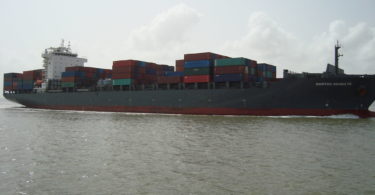
Overview & Recent Fleet Expansion
Safe Bulkers, Inc. (NYSE: SB) is a Monaco-based dry bulk shipping company operating a fleet of Panamax, Kamsarmax, Post-Panamax, and Capesize vessels that transport commodities like coal, grain, and iron ore globally (www.sec.gov) (www.globenewswire.com). The company has been executing a fleet renewal strategy, investing in modern, fuel-efficient ships while phasing out older tonnage. In January 2026, Safe Bulkers announced a major fleet expansion agreement to acquire two newbuild 82,500 DWT Kamsarmax-class vessels with deliveries slated for Q3 2028 and Q1 2029 (www.sec.gov). These eco-friendly newbuilds will meet stringent IMO Phase 3 greenhouse gas (GHG) and NOx Tier III emissions standards, similar to the latest vessels already in its fleet (www.sec.gov). This acquisition brings Safe Bulkers’ orderbook to eight newbuild ships (including two methanol dual-fuel vessels) scheduled to deliver between 2026 and 2029 (www.sec.gov). Management views these investments as essential to boosting growth potential – the new ships will expand carrying capacity by roughly 8–9% through FY2026 and beyond, positioning the company to benefit from any sector upturn and to comply with upcoming environmental rules (seekingalpha.com). Importantly, Safe Bulkers has been actively recycling capital: during 2024–2025 it sold several older vessels at attractive prices and replaced them with newer, more efficient ships (www.lloydslist.com) (www.lloydslist.com). As of early 2026, the operating fleet stands at 45 vessels (average age ~10.5 years), with one older vessel held for sale and a pipeline of modern ships on the way (www.streetinsider.com) (www.globenewswire.com). This fleet renewal drive – highlighted by the recent Kamsarmax orders – underscores Safe Bulkers’ strategy to rejuvenate its fleet and fuel future growth, albeit with careful timing to avoid oversupply. Management notes that maintaining a “prudent balance” of charter coverage (mix of spot and period charters) alongside a “strong capital structure” provides flexibility to capture upside from these fleet additions while preserving cash flow stability (www.streetinsider.com). Overall, Safe Bulkers’ major newbuild program is set to boost its long-term earnings capacity and competitiveness, increasing its growth potential so long as shipping market fundamentals remain supportive.
Dividend Policy, History & Shareholder Returns
Safe Bulkers pays a regular quarterly dividend of \$0.05 per common share, reflecting a modest yield around 3% at recent share prices (stockanalysis.com). The company’s dividend policy has been conservative and cyclical. After paying sizable dividends in its early years as a public company (e.g. \$0.15/quarter pre-2012), the dividend was slashed to near-zero during the mid-2010s dry bulk downturn and ultimately suspended in 2016 as the company focused on survival and fleet renewal (safebulkers.com) (safebulkers.com). With improved market conditions, Safe Bulkers resumed dividends in early 2022 at \$0.05/quarter (safebulkers.com). It has since maintained that payout consistently – by late 2025 the Board had declared the 16th consecutive \$0.05 quarterly dividend (stockanalysis.com). This steady dividend equated to \$0.20 per share for 2025, which was about 50% of adjusted earnings and well-covered by operating cash flow (Adjusted EBITDA of \$128.4M vs. \$20M annual dividend) (www.streetinsider.com) (www.streetinsider.com). Management has characterized the dividend as a way to “reward common shareholders” while keeping ample cash for reinvestment (www.streetinsider.com). Indeed, even in weaker quarters (e.g. Q2 2025’s near breakeven EPS), the \$0.05 dividend was sustained from accumulated cash, signaling commitment to a base payout. At the current rate, dividend coverage appears comfortable – 2025’s free cash generation exceeded dividends by roughly 3×, indicating the payout is well supported by underlying funds from operations.
Beyond cash dividends, Safe Bulkers has occasionally returned capital via share buybacks. In December 2025, the Board authorized a new repurchase program for up to 10 million shares (nearly 10% of outstanding shares, ~20% of the public float) (www.streetinsider.com). This gives management flexibility to retire shares opportunistically, although actual buyback activity has been minimal so far (only ~91.4k shares repurchased by Feb 2026) (www.streetinsider.com). The limited buyback execution suggests management is prioritizing cash for new vessels and debt management over aggressive share repurchases at this stage. It’s worth noting that Safe Bulkers’ dividend yield (~3%) is lower than some dry bulk peers that have used variable dividend policies to distribute windfall profits (for example, certain competitors paid double-digit yields during 2021’s boom). However, Safe Bulkers’ restrained payout reflects its growth-oriented approach – retaining earnings to fund fleet upgrades – and provides scope to increase shareholder returns in the future if leverage declines or cash flows strengthen. The open question is whether the company will raise its dividend or execute meaningful buybacks once the current fleet expansion is further along, or continue prioritizing reinvestment. For now, investors are receiving a modest but steady income stream that management has maintained even through recent market volatility (stockanalysis.com), backed by a cautious payout ratio and strong liquidity.
What's inside? A step-by-step guide to jump in before the SpaceX IPO, how $500 could position you for first-day upside, and two bonus special reports on robotics and the ‘next NVIDIA'.
Jeff has recommended assets that soared thousands of percent. This report compiles his strategy for the biggest AI-driven IPO of 2026.
Leverage, Debt Maturities & Coverage
Safe Bulkers employs moderate financial leverage, with a mix of secured bank loans and one unsecured bond. As of Q4 2025, total debt was about \$540 million (including a €100M unsecured bond), offset by \$162.8M in cash on the balance sheet (www.streetinsider.com). This equates to roughly \$8.4M net debt per vessel, a relatively modest figure for a fleet of large bulk carriers (www.streetinsider.com). The company’s leverage ratio stood around 35–37% of total capital in 2024–2025, indicating a solid equity cushion (stockanalysis.com) (finnhub.io). Importantly, Safe Bulkers has termed-out its debt and maintained strong liquidity: at year-end 2025 it had \$162.8M cash plus \$219.5M of undrawn revolving credit lines available (www.streetinsider.com) – ample to meet near-term obligations and help finance newbuild deliveries. In fact, the company noted it has additional borrowing capacity secured against its eight newbuilds upon their delivery (www.marketscreener.com) (www.marketscreener.com), meaning a significant portion of the new vessel capex can be debt-financed if needed.
Maturity profile: The debt schedule appears quite manageable. Only \$44.8M of debt principal is due in 2026, while the majority of maturities concentrate in 2027–2028 (www.marketscreener.com) (www.marketscreener.com). This lump is largely due to the unsecured bond: in February 2022, Safe Bulkers issued a €100 million five-year senior note (2.95% coupon) due Feb 2027 (finnhub.io) (finnhub.io). The bond is non-amortizing (interest-only until maturity) and is the firm’s only unsecured debt (finnhub.io). On the secured side, bank loans are generally amortizing and tied to vessel assets. The company has proactively refinanced and extended its credit facilities – for example, in 2025 it inked a new \$84.3M credit facility maturing 2030 to refinance seven vessels (including repurchasing four ships from prior sale-leasebacks) (www.stocktitan.net) (www.stocktitan.net). Additionally, an existing \$100M revolver was amended with a sustainability-linked interest margin, aligning cost of debt with emissions performance (www.streetinsider.com). These steps have reduced near-term refinancing risk and slightly lowered average borrowing costs. In Q1 2025, Safe Bulkers’ weighted average interest rate was ~5.8% (including margins) (finnhub.io) – given rising base rates, this is reasonable and benefits from the low fixed 2.95% bond coupon. Estimated annual interest expense (~\$30M) is well-covered by EBITDA (2025 EBITDA \$126M, ~4× interest coverage) and by operating cash flow (www.streetinsider.com) (finnhub.io). Indeed, the company remained in compliance with all debt covenants in 2025 (www.marketscreener.com), and its net debt-to-EBITDA ratio was around 3.0× – a moderate level for a shipping company.
URGENT: Get “Trump\'s Secret Fund” — Learn How to Collect Royalty Checks
Limited report reveals the #1 American oil & gas royalty play that can start paying monthly — with just $50.
Start w/ $50
Yes — Send My Report
Fast download • Instant access • Seats limited
Looking ahead, Safe Bulkers’ capital commitments for its newbuild program totaled \$161M as of Dec 31, 2025 (for six vessels then on order, with \$110M falling due in 2026) (www.marketscreener.com) (www.marketscreener.com). This will be funded through a combination of cash on hand, operating cash flow, and new debt. Given its liquidity position and the likelihood of financing on delivery (banks often lend ~60% of newbuild value), the company appears positioned to handle these investments without straining its balance sheet. Overall, leverage is at a prudent level. Safe Bulkers has intentionally kept debt in check (debt-to-assets in the 30–40% range) to preserve flexibility – a significant factor in the notoriously cyclical shipping industry. This conservative balance sheet, alongside over \$380M of liquidity (cash + undrawn credit) (www.streetinsider.com), provides a buffer to cover all 2026 obligations and then some. It also means the recent fleet expansion is being undertaken from a position of relative financial strength. As a result, debt service coverage and dividend coverage remain solid, barring a severe collapse in freight rates.
Valuation Metrics and Comparables
Safe Bulkers’ stock currently trades around \$6–7 per share, which implies a dividend yield of ~3% (annualized \$0.20 dividend) (stockanalysis.com). Valuing a cyclical shipping company like SB involves multiple angles. On earnings multiples, the stock’s trailing P/E is elevated (~20× based on FY2025 EPS of \$0.30) due to the cyclically soft earnings in 2025 (www.streetinsider.com). However, using a more normalized earnings power (for instance, FY2024 adjusted EPS was \$0.68 (www.streetinsider.com)), the P/E falls to ~9–10×, indicating the market anticipates some rebound in profitability. In terms of asset value, SB’s price-to-book ratio (P/B) is roughly 0.7× by our estimates – the company’s equity per share is around \$9 (supported by relatively modern vessels on its balance sheet), so the stock trades at a meaningful 30% discount to book. Shipping stocks often trade below accounting book value, but this discount suggests investors remain somewhat cautious. One recent analysis highlighted the divergence in SB’s valuation signals: a DCF model implied a fair value near \$6.10, whereas a pure P/B approach (assuming reversion to half of book) would point lower around \$4.55, and cash flow metrics could justify upwards of \$8+ (seekingalpha.com). This wide range underscores the uncertainty in forecasting shipping cash flows and the importance of market conditions in SB’s valuation (seekingalpha.com).
Another lens is EV/EBITDA. Using enterprise value (~\$1.0–1.1 billion) and 2025 EBITDA (\$126M), SB trades about 8× EV/EBITDA. This is slightly above some peers – larger competitor Star Bulk Carriers (NASDAQ: SBLK), for example, has recently traded closer to ~6× EV/EBITDA (reflecting its higher fleet utilization and dividend payouts). However, SB’s multiple is aligned with the dry bulk sector average when adjusting for fleet age and charter coverage. It’s worth noting SB’s fleet renewal strategy (adding fuel-efficient ships) could warrant a small premium, as modern eco-vessels tend to earn higher charter rates and retain value longer. Additionally, SB’s contracted revenue backlog of \$184.8M (as of early 2026) provides earnings visibility (www.marketscreener.com) – the company has a portion of its Capesize and Panamax fleet locked into multi-year charters, which can support valuation by smoothing cash flows (seekingalpha.com). On a cash flow basis, SB generated \$128M in adjusted EBITDA in 2025 and over \$170M in 2024 (www.streetinsider.com). If freight rates normalize upward (closer to 2024 levels), cash flow could rise significantly, driving the stock toward the higher end of valuation estimates. At present, the stock appears fairly valued to slightly undervalued: it’s trading near a mid-cycle DCF value and below net asset value, but the “margin of safety” has narrowed after a ~20% run-up in the past year (seekingalpha.com) (seekingalpha.com). In April 2026, one analyst cautioned that SB’s valuation was getting stretched and technical indicators were turning bearish after the rally (seekingalpha.com). In summary, the market seems to be balancing SB’s long-term strengths (young fleet, growth potential, solid balance sheet) against the near-term uncertainties (choppy earnings, moderate dividend) – resulting in a valuation that is not a deep bargain, but still at a discount to intrinsic asset value. Continued execution (or an uplift in bulk shipping rates) would be needed to unlock significant upside from here.
Key Risks and Challenges
Investing in Safe Bulkers entails understanding the cyclical and volatile nature of the dry bulk shipping industry. The Baltic Dry Index (BDI) – a proxy for bulk freight rates – can swing wildly with changes in global trade demand or fleet supply. This cyclicality is a primary risk: charter rates and vessel values can deteriorate quickly during downturns, compressing SB’s earnings. For instance, after a boom in 2021, dry bulk rates softened in 2022–2023 amid China’s economic slowdown and global macro headwinds, which cut SB’s net income from \$97M in 2024 to \$39M in 2025 (www.streetinsider.com) (www.streetinsider.com). Future macro-economic weakness (e.g. a hard landing in major economies or reduced commodity demand from China) could similarly hit shipping volumes and pricing (seekingalpha.com).
Fleet supply dynamics pose another risk. An influx of new ships industry-wide or “faster supply normalization” after disruptions can lead to oversupply of tonnage, driving freight rates down (seekingalpha.com). While the global dry bulk orderbook is currently moderate, a surge in newbuilding orders (potentially spurred by upcoming environmental rules) or delayed scrapping of older ships could tip the supply-demand balance. Safe Bulkers itself is adding ships – though it has mitigated impact by retiring older vessels – and must rely on the broader industry to scrap or slow-steam enough capacity to keep the market balanced. The company acknowledges these uncertainties, noting that dry bulk markets face “increased volatility” from geopolitical events and that oversupply remains a persistent risk (www.stocktitan.net).
Safe Bulkers is also exposed to geopolitical and regulatory risks. Geopolitical tensions – such as war, trade disputes, or sanctions – can disrupt trade routes or cargo flows (for example, the Ukraine conflict has impacted grain trades). Additionally, pandemic-related disruptions (port closures, crewing challenges) and tariffs/trade policy changes can all affect shipping demand (www.stocktitan.net). On the regulatory front, environmental rules are tightening: the IMO’s carbon intensity and emissions regulations (EEXI, CII, etc.) are forcing the industry to invest in cleaner technology or accept speed limits on older ships. Safe Bulkers has been proactive, but there’s risk of costly decarbonization requirements – e.g. retrofitting vessels or using expensive alternative fuels – which could squeeze margins or render older ships obsolete (seekingalpha.com) (www.stocktitan.net). The company specifically cites uncertainty around future marine fuels’ availability and pricing as a risk factor (www.stocktitan.net). Two of SB’s on-order ships are methanol dual-fuel, but the availability of viable alternative fuels at scale by delivery time is still an open question. In the interim, compliance costs (for low-sulfur fuel, carbon intensity improvements, etc.) will be an ongoing burden.
Financially, interest rate risk is relevant: SB’s debt includes floating-rate bank loans, so rising global interest rates increase interest expense (though about 20% of debt is fixed-rate via the bond) (finnhub.io). Higher financing costs could weigh on future profitability or limit debt capacity for growth. That said, SB’s balance sheet is in good shape and all debt covenants are currently met (www.marketscreener.com); a severe asset-value decline (from a market crash) could threaten loan-to-value covenants, but with ~35% leverage and many newer ships, SB has a cushion. Another risk is counterparty risk: SB charters vessels out to commodities shippers – if a major charterer defaulted during a downturn, the company could face revenue losses or vessels idling.
Competitive and market risks also bear mention. The dry bulk sector is fragmented and highly competitive; larger players or peers with lower operating costs can drive charter rates down. Any operational mishaps (such as a vessel accident, environmental incident, or prolonged downtime) could not only incur costs but also tarnish SB’s reliability reputation with customers. The company must also manage rising operating expenses – crew wages, lubes, and insurance costs have been climbing industry-wide. Safe Bulkers’ daily operating cost was about \$5,790 per vessel in 2025 (www.streetinsider.com); inflationary pressures could push this higher, eroding profit if not passed through in charter rates. Finally, currency fluctuations (the company reports in USD, but has some Euro-denominated costs/debt and global revenue exposure) and fuel price volatility (affecting voyage costs and scrubber economics) add to the risk mix. In summary, SB faces the typical risks of a shipping company – cyclical earnings, regulatory and market uncertainties – but its relatively young fleet and stable finances help mitigate some of these challenges.
Red Flags & Governance Considerations
While Safe Bulkers has navigated recent years prudently, a few red flags and governance aspects are noteworthy. First, the company’s management structure involves related-party entities. SB’s fleet is managed by Safety Management Overseas and Safe Bulkers Management (including a Monaco affiliate), which are privately controlled by CEO Polys Hajioannou and his family (www.marketscreener.com). These entities charge managerial, brokerage, and vessel supervision fees to the company. For example, SB’s contractual obligations include ~$40.8M in future payments to its Managers for services (daily ship management fees, newbuild supervision fees, etc.) (www.marketscreener.com). Such related-party arrangements are common in Greek shipping companies, but they pose a potential conflict of interest: the Hajioannou family can benefit from fees in addition to dividends. Investors should monitor whether operating costs (including related-party fees) remain in line with industry standards. The company discloses these transactions in its filings, and thus far there’s no clear indication of excessive fees, but the opacity of related-party dealings is a perennial governance concern.
Additionally, Safe Bulkers has a controlling shareholder dynamic. CEO Polys Hajioannou and his family hold a large ownership stake – estimated at roughly 50% of outstanding shares (with a public float of only ~50% after accounting for insiders) (www.streetinsider.com). In fact, some debt covenants require the Hajioannou family to maintain a minimum ownership (e.g. at least 20% of voting rights) for the loans and bond to remain in place (www.marketscreener.com). On one hand, this aligns management and shareholder interests – the CEO’s fortune is tied to the company’s success, suggesting decisions will be made for long-term value. On the other hand, minority investors have limited influence; the controlling family can effectively steer major decisions (dividend policy, issuance, M&A) and could veto any potential takeover. The heavy insider ownership also means lower stock liquidity, which can increase volatility. Notably, despite authorizing share buybacks, management’s minimal execution (less than 1% of the authorization used so far (www.streetinsider.com)) might indicate reluctance to significantly reduce the public float further or a belief that capital is better used elsewhere.
Another red flag is historical dividend cuts: SB has shown in past downturns that it will sharply cut or suspend the common dividend to conserve cash (as seen in 2015–2016 when the payout dropped to $0.01 and then zero (safebulkers.com)). While this is fiscally prudent, income-focused investors should be aware that SB’s dividend is not sacrosanct – it’s dependent on bulk market conditions. The preferred stock dividends (on SB’s two series of preferred shares) are cumulative and have been consistently paid (safebulkers.com) (safebulkers.com), which means preferred shareholders have priority. This capital structure could be seen as a risk for common equity in extreme scenarios; however, the preferred issuance is relatively small and the company redeemed one series in 2018, indicating no recent abuse of preferred financing.
Lastly, the company’s small market cap (~\$500–$600M) and industry niche mean it is covered by relatively few analysts and can be subject to price volatility on low trading volumes. This limited coverage might cause mispricings – a double-edged sword as it can mean opportunity or risk. We also note that no major corporate governance scandals have emerged at SB, and the board of directors does include independent members. Nonetheless, investors should keep an eye on any related-party asset sales or purchases (e.g. if SB were to buy vessels from entities affiliated with the CEO, which would warrant scrutiny for fair pricing). So far, SB’s fleet additions appear to be from third-party yards or sellers, not insider-owned assets. In summary, the governance red flags boil down to SB being a tightly-controlled family shipping company with external management agreements. These are not uncommon in this sector, but they underscore the importance of trusting management’s alignment with all shareholders. Given Polys Hajioannou’s longstanding stewardship (and significant personal stake), many investors take comfort in his vested interest – but continued transparency around related-party dealings will be key.
Outlook and Open Questions
Safe Bulkers enters 2026 with improved prospects thanks to its fleet renewal, but several open questions remain:
– Market Cycle Trajectory: Will the dry bulk shipping market strengthen enough in the coming years to fully utilize Safe Bulkers’ expanded fleet? The company is adding capacity (~8% growth by FY2026 (seekingalpha.com)) – if demand (e.g. Chinese commodity imports, global grain trade) fails to rise accordingly, SB’s newbuilds could pressure earnings instead of boosting them. Conversely, if the anticipated sector recovery materializes (helped by relatively low global orderbook growth and an aging world fleet), SB is poised to benefit outsizedly. The balance of supply and demand is crucial – industry watchers are asking whether higher scrapping of old ships and modest new orders will keep the market tight enough as SB’s ships arrive.
– Capital Allocation Strategy: How will Safe Bulkers deploy its capital as the fleet growth phase matures? The company’s conservative dividend and recent buyback authorization signal flexibility. If cash flows increase (via higher charter rates or earnings from new vessels), will SB opt to raise its dividend or execute substantial share repurchases to reward shareholders? Or will management continue prioritizing fleet expansion and debt reduction? This decision will impact SB’s valuation relative to peers – many investors prefer shipping companies that return cash in good times. Clarity on whether SB might adopt a variable dividend policy (as some peers did) or stick to its token \$0.05 quarterly payout is an open question. Thus far, management has favored reinvestment, but that could evolve once the current newbuild program winds down.
– Regulatory and Technological Adaptation: What is Safe Bulkers’ long-term plan for decarbonization beyond the current newbuild orders? The company has two methanol dual-fuel ships on order and a majority of its new deliveries are IMO GHG Phase 3 compliant (www.sec.gov). However, the industry’s shift to alternative fuels (LNG, methanol, ammonia, etc.) is still in early stages. Will SB’s bet on methanol propulsion pay off, and how quickly will bunkering infrastructure develop to support these vessels? Moreover, how will SB handle its remaining older ships that are not as eco-friendly – will it need to incur additional capex for retrofits or accept slower speeds to meet carbon intensity targets? The efficacy of SB’s environmental strategy (and potential costs of compliance) is a lingering question, especially with IMO 2030 and 2050 targets looming (www.stocktitan.net).
– Industry Consolidation and M&A: In a dry bulk sector that has seen increased consolidation, where does Safe Bulkers fit? Recently, larger competitor Star Bulk proposed acquiring another rival’s fleet (Diana Shipping’s vessels) in tandem with an offer for Genco Shipping (www.nasdaq.com). Will Safe Bulkers remain a standalone player, or could it participate in consolidation – either as an acquirer of smaller fleets or even as a target for a bigger company seeking modern ships? The Hajioannou family’s control makes an unsolicited takeover unlikely, but strategic combinations aren’t off the table in shipping’s quest for scale. Investors may wonder if SB could partner with or be absorbed by a larger line to accelerate growth (though management has given no indication of this so far). The open question is whether scale will become critical for competitive advantage (lower unit costs, better charter optionality) – if so, SB might need to consider M&A down the road despite its organic growth.
– Macro and Trade Policy Uncertainties: How will evolving global conditions impact SB’s performance? For example, China’s economic trajectory (property sector health, infrastructure stimulus) heavily influences dry bulk demand for iron ore and coal. Similarly, a resolution or escalation of the Ukraine grain export situation, or changes in global trade policies/tariffs, could alter cargo flows that Safe Bulkers carries. With geopolitical shifts (e.g. a potential rebound in commodities due to emerging market growth, or conversely a green energy transition reducing coal trade), SB’s outlook could swing. An open question is whether we’ll see a new commodities super-cycle in the late 2020s that lifts all dry bulk boats, or a continued pattern of volatility and regional shifts. SB’s balanced chartering approach (mix of medium-term contracts and spot exposure (www.streetinsider.com)) gives it some resilience, but the broader macro trends are largely out of its control.
In conclusion, Safe Bulkers has positioned itself for growth with a modernizing fleet and solid financial footing. The recent “major acquisition” of new eco-friendly vessels underscores its commitment to long-term competitiveness and growth potential. However, investors should weigh that potential against the uncertainties inherent in shipping. The coming years will answer whether Safe Bulkers can translate its fleet investments into significantly higher earnings and dividends – or whether external factors will temper the anticipated gains. The pieces are in place for SB to succeed (young fleet, manageable debt, experienced management), but execution and market conditions remain key. As we monitor SB, these open questions will be vital in determining the ultimate payoff of its fleet expansion strategy.
Sources: Safe Bulkers SEC filings and press releases; company investor presentations and financial reports; industry analysis from Seeking Alpha and maritime news; and data on dividends, debt, and fleet metrics from official filings and financial databases. (www.sec.gov) (stockanalysis.com) (www.streetinsider.com) (www.stocktitan.net)
For informational purposes only; not investment advice.