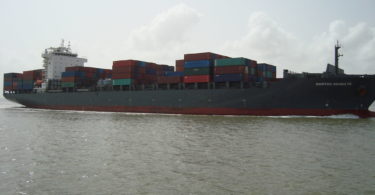
Overview: Euroseas Ltd. (NASDAQ: ESEA) is a container shipping company making aggressive fleet investments, particularly in specialized “high-reefer” capacity feeder ships. In 2026, Euroseas expanded its newbuild program to ten vessels (including several 2,800 TEU ships each equipped with over 1,000 refrigerated container plugs) with a total contracted cost of about $500 million (www.globenewswire.com) (www.globenewswire.com). This bold fleet expansion aims to capitalize on growing demand for refrigerated cargo transport and to keep Euroseas’ fleet among the youngest in the feeder segment (www.globenewswire.com) (www.globenewswire.com). The company plans to finance these new vessels with a mix of debt and equity, supported by a $650 million charter revenue backlog extending well into 2028 (www.globenewswire.com) (www.globenewswire.com). Below, we dive into Euroseas’ dividend policy, balance sheet leverage, earnings coverage, valuation, and key risks as the company executes on its high-reefer fleet growth strategy.
Dividend Policy & Yield
Euroseas has a shareholder-friendly dividend policy, recently reinstated after a long hiatus. The company suspended its quarterly dividend in late 2013 (last paid was $0.15 in Q3 2013) to conserve cash during a downcycle (www.sec.gov). In mid-2022, the Board reinstated dividends at $0.50 per share quarterly and maintained that rate through 2022 and the first three quarters of 2023 (www.sec.gov). As earnings surged, Euroseas began raising the payout: $0.60 per share for Q4 2023 (and Q1–Q3 2024), then $0.65 for Q4 2024 (and Q1 2025), $0.70 for Q2–Q3 2025, and most recently $0.75 for Q4 2025 (www.sec.gov) (www.sec.gov). This progression highlights a steady commitment to share returns as cash flows increased.
At the current quarterly rate of $0.75, Euroseas’ dividend yield is roughly 5% on an annualized basis (www.globenewswire.com). Management emphasizes that the dividend is intentionally “high yielding” yet sustainable, given the strong contracted revenues and earnings visibility (www.globenewswire.com) (www.globenewswire.com). Notably, Euroseas also utilizes share buybacks alongside dividends – the company repurchased about 480,000 shares (nearly 7% of the float) for ~$11.3 million through early 2026 under its $20 million buyback plan (www.globenewswire.com). These buybacks reflect management’s view that the stock trades well below intrinsic value (www.globenewswire.com), complementing the dividend in delivering shareholder returns. Overall, Euroseas’ dividend track record since 2022 shows prudent increases aligned with profitability, resulting in a current yield around 5% that is amply covered by earnings (as detailed below).
Leverage & Debt Maturities
Euroseas entered 2026 with a strong balance sheet and moderate leverage. As of December 31, 2025, the company’s outstanding bank debt was $218.6 million against cash reserves of $183.3 million (www.globenewswire.com). This implies a very low net debt of roughly $35 million – a modest leverage position given 2025’s $155.9 million in adjusted EBITDA (www.globenewswire.com). Euroseas’ debt largely consists of secured vessel loans that amortize gradually; scheduled debt repayments in the coming 12 months are only about $19.5 million, which is easily managed from operating cash flow (www.globenewswire.com). Interest expense was $14.5 million in 2025 (with additional interest capitalized on newbuilds) (www.sec.gov), a small fraction of EBITDA – indicating healthy interest coverage of roughly 10×. In short, the company’s current leverage is low, and near-term maturities are minimal, giving Euroseas financial flexibility.
However, the ongoing fleet expansion will significantly increase capital requirements. The newbuild program for ten vessels represents about $500 million in capital expenditures through 2028–2029 (www.globenewswire.com). Euroseas has stated these ships will be financed with a combination of debt and equity (www.globenewswire.com). We can expect the debt balance to rise in coming years as newbuilding installments and delivery payments come due. The company’s strategy is to secure multi-year charter contracts on new vessels (often forward-fixed charters commencing at delivery) to support financing – for example, it already chartered its four 4,800+ TEU newbuilds for 4–5 year terms at ~$35,500/day (www.globenewswire.com). This provides revenue visibility and should make lenders comfortable extending credit. Euroseas cited a $650 million contracted revenue backlog stretching beyond 2028, which underpins its ability to service additional debt tied to the expansion (www.globenewswire.com). In summary, Euroseas’ current debt load is very manageable, and while leverage will increase as new ships are delivered, the company appears to be pacing its growth with corresponding charter coverage and a “disciplined approach to capital allocation” (www.globenewswire.com) to avoid overstretching the balance sheet.
Want the exact ticker tied to Project Trillionaire?
Inside: step-by-step instructions to take a $100 position in the company acting as SpaceX’s silent partner — plus the ticker and timing tips.
Coverage and Payout Ratio
Euroseas’ dividend is extremely well-covered by its earnings and cash flow. For full-year 2025, the company reported net income of $137.0 million ($19.73 per share) (www.globenewswire.com), while the total common dividends related to 2025 (including the Q4 2025 payout made in March 2026) sum to roughly $15 million. This implies a payout ratio on the order of 11% of net income, meaning nearly 90% of earnings were retained for reinvestment or debt reduction. Even using a more normalized metric, Euroseas’ adjusted net income was $116.3 million for 2025 (www.globenewswire.com), still making the dividend payout only ~13% of adjusted earnings. In other words, earnings cover the dividend about 8–9 times over, providing a huge buffer. Likewise, operating cash flow (bolstered by multi-year charters) comfortably exceeds dividend outlays.
This conservative payout reflects management’s priority to fund growth while rewarding shareholders. It contrasts with many maritime companies that pay out a high percentage of cash flows. Euroseas’ low payout ratio suggests the dividend is sustainable even under weaker market conditions, and could potentially be increased further if earnings remain strong. Importantly, the company’s interest obligations are also well-covered – 2025 EBITDA was over 10× the year’s cash interest expense, as noted above. Overall, coverage metrics are robust: both debt service and dividends are easily funded, thanks to locked-in charter revenues and high operating margins. This financial strength allows Euroseas to pursue its fleet expansion without compromising dividend stability in the near term.
Valuation & Peers
Despite its solid performance and growth plans, Euroseas’ stock trades at deep value multiples, in line with the broader shipping sector’s skepticism toward peak-cycle earnings. At an early 2026 share price in the ~$60–70 range, ESEA is valued at roughly 3–4× trailing earnings (2025 EPS was $19.73 (www.globenewswire.com)). Even on an enterprise basis, the stock is very cheap: enterprise value is about $525 million (market cap ~$490 M plus net debt ~$35 M), which is only ~3.4× 2025 EBITDA. This suggests the market is pricing in a significant downturn in future charter rates or profits. Management has repeatedly pointed out that Euroseas trades at a “substantial discount to our net asset value (NAV)”, and has backed that view by repurchasing shares opportunistically (www.globenewswire.com). NAV estimates fluctuate with vessel markets, but given the charter-attached value of its fleet, the stock likely trades well below the liquidation value of its assets (after debt). In essence, investors are assigning little credit to the company’s $550+ million of contracted revenue over the next five years (www.globenewswire.com) and the earnings those will generate.
Compared to peers, Euroseas’ valuation is in the same ballpark or cheaper. Other container-ship lessors like Global Ship Lease (GSL) and Danaos (DAC) also trade at low single-digit P/E ratios and a discount to NAV, reflecting cyclical concerns. Euroseas’ dividend yield of ~5% is a bit lower than some peers (for example, GSL offers ~8–9% yield (talkmarkets.com)) because Euroseas retains a larger portion of cash for growth. However, on an EV/EBITDA or earnings basis, ESEA is just as cheap or cheaper than these larger peers, despite having one of the most modern fleets and a sizable pipeline of charters. The undervaluation appears driven by macro sentiment – investors doubt that current elevated charter earnings will persist long-term. If the feeder container market remains firm, there is considerable upside potential for multiple expansion. For now, Euroseas trades at a bargain valuation relative to its secured earnings and book value, a sign that the market remains cautious on shipping stocks.
Risks & Red Flags
While Euroseas is fundamentally strong, its strategy carries several risks and red flags that investors should monitor:
– Cyclical Market & Charter Roll-Overs: Container shipping is a highly cyclical industry. Euroseas has benefitted from unusually high charter rates in 2021–2023. A wave of new large container ships is set to hit the water globally, which could pressure charter rates by the late 2020s. Management acknowledges “the high orderbook in the large containership segments” as a challenge (www.globenewswire.com). If market rates weaken when Euroseas’ current charters expire (many extend into 2027–2028 (www.globenewswire.com)), the company’s revenues and profit could decline. The flip side is that in Euroseas’ niche – feeder vessels – the orderbook is relatively small and the fleet is older on average, which may limit supply growth (www.globenewswire.com). Nonetheless, a severe downturn in container shipping demand or a post-boom slump is a key risk to watch.
– Newbuild Execution & Funding Risk: Expanding the fleet with ten new ships is a complex, multi-year undertaking. There is execution risk around construction delays, cost overruns, or specification issues. More critically, Euroseas must fund about $500 million in installment payments. While it intends to use debt financing, adverse credit market conditions or a drop in vessel values could make it harder to secure loans on good terms. The company may need to tap equity markets or divert more cash flow to capex. In a risk disclosure, Euroseas warns that failure to obtain financing for its capital expenditures could materially affect operations (and even the ability to pay dividends) (www.sec.gov). Even if financing is obtained, taking on much more debt will increase leverage and could test bank covenants in a weak market. The commitment to grow is bold, but it heightens the company’s exposure to future market conditions when the ships deliver in 2027–2029.
– Customer and Charterer Risk: Euroseas’ cash flows depend on counterparties (liner companies) honoring their long-term charters. Concentration isn’t extreme, but the four large newbuild vessels under construction were all fixed to a single charterer for 4+ years (www.globenewswire.com) (with an option to extend at a lower rate (www.globenewswire.com)). If a major charterer were to default or seek to renegotiate (for example, in a recession), Euroseas could face temporary revenue loss or re-chartering at lower rates. Liner company bankruptcies are rare lately but not impossible (e.g. Hanjin in 2016). High charter coverage is a strength, but it also means counterparty credit risk is concentrated.
– Aging Vessels and Residual Value: Although Euroseas is renewing its fleet, it still has some older ships on the water. For instance, at least one feeder (M/V Evridiki G, built 2001) will be ~28 years old when its current charter ends in mid-2026 (www.globenewswire.com). Older ships face higher operating costs and may need costly special surveys or retrofits to remain compliant with new environmental regulations. Their resale or scrap values can be volatile. Euroseas has spun off or sold its oldest vessels (two 90’s-built ships were spun-off into Euroholdings in 2025 (www.globenewswire.com)), but any remaining aging assets still pose a residual value risk. The company may eventually incur losses or scrap these vessels if they become unprofitable to operate.
– Related-Party Management & Governance: Euroseas is part of a family-owned shipping group, which can raise governance considerations. The Pittas family (founders) and related entities control a significant stake (insiders and 5% holders as a group own ~59% of shares) (www.sec.gov) (www.sec.gov). The fleet’s commercial and technical management is handled by Eurobulk Ltd., an affiliated private company (www.globenewswire.com). While this arrangement provides experienced management, it also means related-party transactions (e.g. management fees of ~$840 per vessel per day (www.globenewswire.com)). Investors should watch that such arrangements remain at market rates and that controlling shareholders’ interests align with minority investors. So far, Euroseas’ insiders have shown alignment through buybacks and dividends, but the heavy insider ownership does reduce liquidity and takeover potential.
– Geopolitical and Regulatory Risks: Global trade tensions, tariffs, or unexpected events (pandemics, wars, canal closures) can impact container volumes and routes. Euroseas noted that factors like the Suez Canal’s reopening (after blockage) can suddenly “release” ships and reduce demand due to shorter transit routes (www.globenewswire.com). Geopolitical conflicts (e.g. Middle East tensions) and changes in trade policy (e.g. U.S.–China tariffs) add uncertainty to shipping demand (www.globenewswire.com) (www.globenewswire.com). On the regulatory front, increasing environmental rules (IMO carbon intensity measures, future fuel requirements) could require investments in vessel upgrades or affect operating speeds. Euroseas is addressing this by building new ships to high emissions standards (EEDI Phase 3, IMO Tier III) (www.globenewswire.com) and retrofitting some existing vessels (www.globenewswire.com). Still, regulatory compliance costs and the risk of being outpaced by “greener” technology (e.g. LNG or methanol-fueled ships) is something to monitor in the long run.
In sum, Euroseas faces typical shipping cyclicality and expansion-related risks. The company’s strong charter coverage and modern fleet focus help mitigate some risks, but investors must be comfortable with the volatile nature of the container shipping business and the execution risks of the aggressive fleet growth plan.
Open Questions & Outlook
Finally, here are some open questions and issues to watch as Euroseas moves forward with its high-reefer fleet expansion:
– How Will the Expansion be Financed? Euroseas’ plan to use debt and equity for newbuilds is general; specifics remain to be seen. Will the company issue new equity or preferred stock to bridge any funding gaps, especially if charter markets soften (which could lower the debt capacity on new ships)? Management has thus far avoided dilutive equity raises, instead funding growth through internal cash and moderate debt. But the scale of the newbuilding program begs the question of whether additional capital raises might be needed. Successful financing on reasonable terms will be crucial to realizing the expansion without undermining shareholder returns (www.sec.gov).
– Will Dividend Growth Continue or Pause? Euroseas has been raising its dividend consistently as profits climbed. With heavy capex commitments ahead, the Board may become more conservative on further dividend hikes (or even hold the dividend flat) to conserve cash. Conversely, if earnings stay robust, they might maintain the policy of incremental increases. Investors will want to see if Euroseas can balance growth and yield – i.e. continue rewarding shareholders during the fleet expansion. Any deviation from the current dividend trajectory (for example, a pause or reduction) would be a notable development to reassess.
– Market Conditions in 2027–2029: The thesis for ordering so many feeder vessels relies on the “long-term fundamentals of the feeder container market” holding up (www.globenewswire.com). By the time Euroseas’ new ships are delivered (2027–2029), will demand for feeder and refrigerated container capacity be strong enough to employ them at attractive rates? The company is effectively betting that the current tightness in feeder ships (due to aging fleet and limited new supply) will continue or even intensify. This is a reasonable assumption per industry trends, but it remains an open question. A lot can change in global trade over a few years. Euroseas does have the option to defer or not exercise some of the additional vessel orders if the outlook changes (www.globenewswire.com) (www.globenewswire.com). How the supply/demand balance plays out by the late 2020s will ultimately determine the payoff of ESEA’s bold expansion.
– Execution of High-Reefer Strategy: Euroseas is entering the refrigerated container (“reefer”) transport niche in a big way with its 2,800 TEU newbuilds. Managing and marketing this high-reefer capacity will be important. Reefers can earn premium rates, but require certain trade routes and customers (e.g. fruit, meat, pharma exporters). Can Euroseas secure employment for these ships that fully values their 1,000+ reefer plug capacity? The initial outlook is optimistic (www.globenewswire.com), but the company will need to demonstrate that this niche investment does indeed “generate returns and enhance long-term value” as intended (www.globenewswire.com). Successful chartering of the high-reefer ships (perhaps even at above-normal rates due to their spec) would validate the strategy. It’s an open question to monitor once these vessels come on line.
– M&A or Further Asset Plays: Given the fragmented nature of the feeder ship market, will Euroseas remain purely organic in growth? The spin-off of older vessels into Euroholdings in 2025 showed one creative approach to managing the fleet portfolio (www.globenewswire.com). It’s worth watching if Euroseas pursues any mergers, acquisitions, or additional spin-offs. A larger peer could view Euroseas as an attractive takeover target for its charter backlog and newbuild pipeline – although the Pittas family’s large stake might make a buyout less likely. Alternatively, Euroseas itself could look to acquire secondhand ships if prices drop during a downturn, especially since it has operational expertise in feeders. Management has signaled focus on organic newbuild growth for now, but this could evolve if market conditions shift.
Outlook: Euroseas has boldly transitioned from a small player with aging ships to a growth-oriented company with a state-of-the-art fleet pipeline. The current fundamentals – locked-in charters, strong earnings, low leverage – put it in a good position to execute its plans. Still, shipping investors are forward-looking and cautious; as reflected in ESEA’s low valuation, many are waiting to see if this expansion pays off without a hitch. How Euroseas navigates the next few years, balancing capital spending with shareholder returns and managing cyclical swings, will determine if the stock’s substantial discount can close. In the meantime, the company offers a rare mix of a robust dividend and significant growth optionality. Euroseas’ “high-reefer” fleet gamble is one to watch – it could solidify the company’s niche leadership if the container market’s trajectory aligns with management’s bullish long-term view (www.globenewswire.com) (www.globenewswire.com).
For informational purposes only; not investment advice.